
When you’re putting together a preparedness kit, it’s easy to focus on food, water, flashlights, batteries and other everyday essentials. But medical supplies deserve a place in that planning too.
As someone with a nursing background, I’ve always paid attention to how medical supplies are organized and how quickly they can be accessed. That’s one of the things that caught my attention about the FlareSyn™ Compact Tactical Trauma IFAK Kit.
I’m not saying this is the perfect medical kit for everyone, and I’m not presenting it as a substitute for professional medical care. I simply like the way this particular kit approaches basic trauma preparedness in a compact package.
What Is an IFAK?
IFAK stands for Individual First Aid Kit.
The idea is pretty simple: instead of keeping all of your medical supplies in one large first-aid bag, an IFAK gives you a smaller collection of supplies intended to be carried where they can be accessed quickly.
For preparedness, that can be useful.
You might keep a larger first-aid kit at home while having a smaller IFAK in a vehicle, camping pack, range bag, emergency bag or attached to compatible gear.
The important thing is knowing what you have, where it is and how to use the supplies you carry.
Why I Like the Compact Design
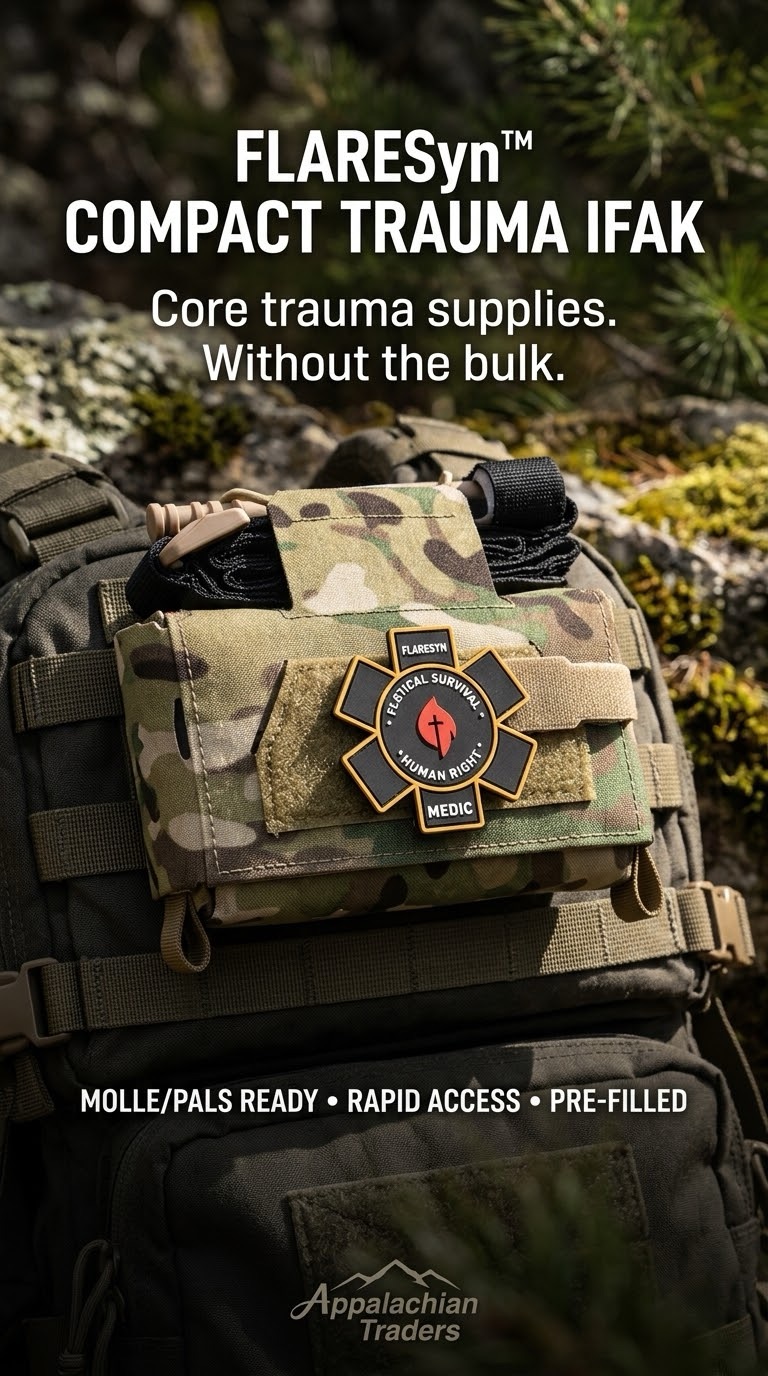
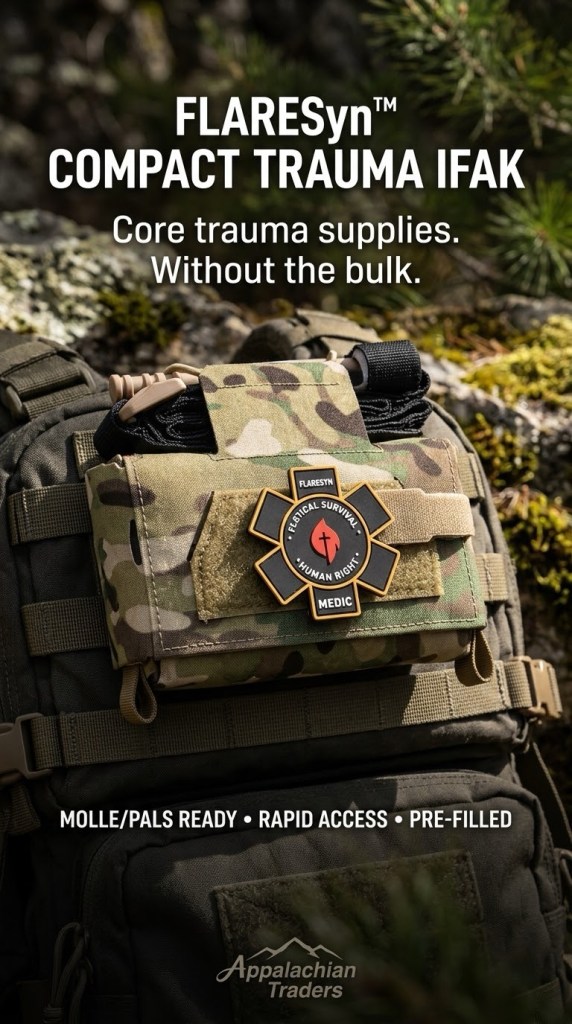
One of the first things I noticed about the FlareSyn™ Compact Tactical Trauma IFAK is the size.
The listed dimensions are approximately 170 × 130 × 50 mm, giving it a relatively low-profile footprint compared with a full-size medical bag.
That matters because preparedness gear can get bulky quickly.
You don’t necessarily want another large bag taking up valuable space in your vehicle or backpack. A smaller pouch can give you another option for carrying specific medical supplies without turning your entire setup into a mobile hospital.
For my own preparedness mindset, I prefer equipment that has a clear purpose and doesn’t take up unnecessary space.
MOLLE/PALS Compatibility
The FlareSyn™ IFAK is designed to work with MOLLE/PALS webbing, which gives you several options for where you can carry it.
Depending on your setup, it can be attached to compatible gear such as a backpack, carrier or other MOLLE-compatible equipment.
I like this concept because accessibility is important.
Medical supplies don’t do much good sitting at the bottom of a large bag underneath everything else.
Having a dedicated pouch means you know where that particular equipment is located.
Quick Access
Another feature I like is the quick-pull design.
The idea is that the pouch can be removed from its mounted position without having to take your entire carrier or bag off.
That’s a practical feature for preparedness.
When something goes wrong, the last thing you want is to be digging through several compartments trying to remember where you put something.
Of course, having quick access to a medical kit doesn’t replace training. You still need to understand what your equipment is for and when it is appropriate to use it.
Pre-Filled and Organized
The FlareSyn™ Compact Tactical Trauma IFAK comes pre-filled rather than simply being an empty pouch.
The company describes the loadout as including core trauma supplies, airway-support items, PPE and documentation components.
For someone starting from scratch, having a pre-filled kit can make the process of building a preparedness setup simpler.
That said, I always recommend looking through any pre-packed medical kit yourself.
Know exactly what is included.
Check expiration dates where applicable.
Make sure packaging is intact.
Replace anything that has been used or damaged.
And most importantly, understand what the individual supplies are designed to do before you ever need them.
As Someone With a Healthcare Background
This is probably the biggest reason I personally like this style of kit.
Working around healthcare has made me appreciate organization.
You don’t want to have to search through a pile of unrelated supplies when you’re trying to find something specific.
I also like the idea of separating everyday first-aid supplies from more focused trauma equipment.
A basic home first-aid kit might contain things such as adhesive bandages, medications, antiseptic supplies and other everyday items.
An IFAK serves a different purpose.
It’s a more focused piece of your overall preparedness system.
For me, that’s what makes a compact IFAK worth considering.
Where Could You Keep One?
There isn’t one correct place for an IFAK.
Depending on your needs, a compact kit could be useful in places such as:
- A vehicle emergency kit
- A camping or hiking pack
- A preparedness bag
- A work or utility bag
- A larger first-aid setup
- Compatible MOLLE/PALS gear
The important thing is choosing a location where the kit can be accessed when you need it.
If you have a kit but can’t remember where you put it, you’ve defeated part of the purpose.
Don’t Forget About Training
This is something I think gets overlooked when people buy emergency equipment.
Buying a medical kit is only one part of being prepared.
You should also learn basic first-aid and emergency-response skills appropriate to your level of training.
If you’re carrying specialized trauma equipment, take the time to understand what each item is and how it is intended to be used.
A piece of equipment sitting unopened in a pouch isn’t a substitute for knowledge.
Preparedness isn’t about buying the most expensive gear you can find.
It’s about having useful supplies, knowing how to use them and building your skills over time.
My Take
The reason the FlareSyn™ Compact Tactical Trauma IFAK stands out to me isn’t because I think everyone needs the exact same medical kit.
It’s because I like the basic concept.
It’s compact.
It’s organized.
It’s designed for MOLLE/PALS mounting.
It has quick-pull access.
And it comes pre-filled rather than requiring you to start with an empty pouch.
As someone with a healthcare background, those are the things that make sense to me when I’m looking at a medical preparedness setup.
I would still recommend looking over the contents yourself, making sure everything is in good condition and getting appropriate training before relying on any medical equipment.
For me, it’s another example of what practical preparedness should look like: have useful equipment, keep it organized and know how to use it.
Final Thoughts
You don’t have to be a hardcore prepper to start taking medical preparedness seriously.
Start with the basics.
Have a first-aid kit.
Learn basic first aid.
Keep important supplies organized.
And consider adding a compact trauma-focused kit to your overall preparedness setup if it fits your needs and training.
Preparedness isn’t about being afraid of what might happen.
It’s about being a little more ready when something does.
Interested in the FlareSyn™ Compact Tactical Trauma IFAK?
Check out the FlareSyn™ Compact Tactical Trauma IFAK
Disclosure: This is an affiliate link. Appalachian Traders may earn a commission if you make a purchase through this link, at no additional cost to you.
 Appalachian Traders
Leave a comment