
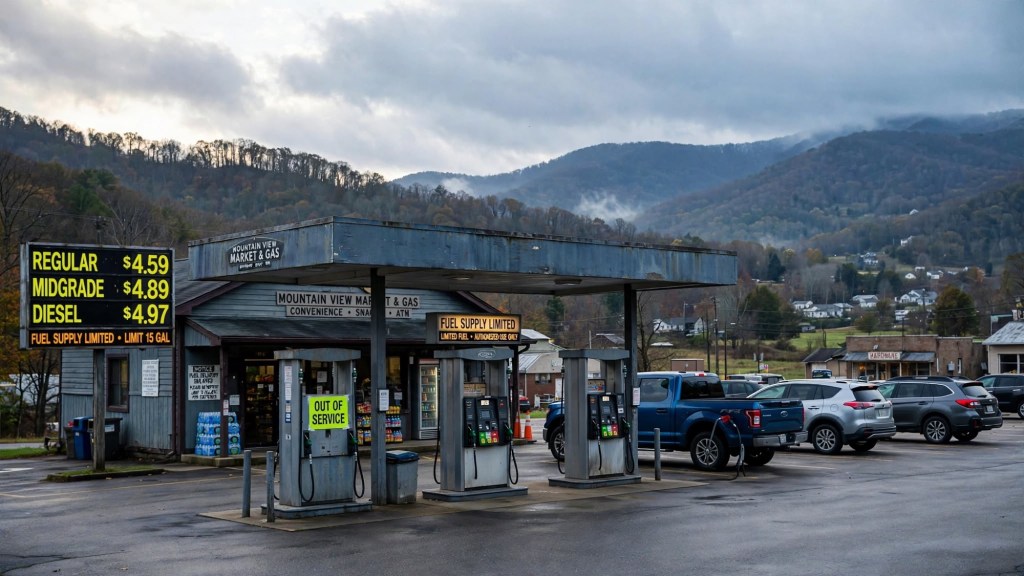
For most of us, a fuel shortage sounds like something that happens somewhere else.
We see gas prices go up, complain about it, and still fill up the truck and go about our day.
But what happens when a major disruption to the world’s energy supply lasts for months instead of weeks?
That’s the question worth paying attention to.
The Strait of Hormuz Matters
The Strait of Hormuz is one of the world’s most important energy routes. A prolonged blockade or disruption can affect how much oil and liquefied natural gas reaches the global market.
A May 1, 2026 report from EnergyNow, citing Bloomberg, quoted Shell CEO Wael Sawan saying the energy supply-demand balance could remain tight for the coming months and potentially the next year-plus because of the disruption. The report also said roughly 900 million barrels of oil had not been produced over the preceding months, with inventories being drawn down to make up some of the difference. (EnergyNow)
That’s not a prediction that America is going to run out of gasoline.
It’s a warning about what a prolonged supply problem can do.
What Could Happen If It Continues?
If the disruption continues into 2027, we could see continued pressure on fuel prices and potentially more localized supply problems.
That doesn’t necessarily mean every gas station in America goes dry.
It could look more like:
- Higher gasoline and diesel prices
- Longer lines at busy stations
- Temporary shortages at individual stations
- Fuel deliveries becoming more difficult
- Higher transportation costs
- More pressure on trucking and agriculture
- Businesses passing increased fuel costs on to customers
And if you’re living in a rural area, fuel availability can matter even more.
A lot of us in Appalachia drive considerable distances for work, groceries, medical appointments and supplies.
Don’t Prepare for a Date
This is where I think preparedness gets misunderstood.
I don’t think anyone should read this and say, “We’re going to run out of gas in spring 2027.”
We don’t know that.
Nobody can give us an exact date.
Instead, look at the situation as a possibility that deserves preparation.
If the energy disruption gets resolved quickly, great.
If it doesn’t, you’ll be glad you weren’t completely dependent on the assumption that fuel would always be cheap and readily available.
What Can You Do Now?
You don’t need to panic-buy gasoline.
Actually, panic buying can make a shortage worse.
Instead, start with the basics.
Keep your vehicle maintained.
Don’t routinely run your tank down to empty.
Combine errands when possible.
Keep basic household supplies on hand so you aren’t constantly making unnecessary trips.
Think about alternative ways to handle small jobs around your property without using a vehicle every time.
And keep some emergency supplies that allow you to stay home for a while if traveling becomes difficult or expensive.
That’s preparedness.
Not fear.
The Bigger Picture
The lesson here isn’t that the world is ending.
It’s that our everyday lives depend on systems that most of us never think about.
Fuel moves food.
Fuel moves medicine.
Fuel moves building materials.
Fuel moves the products sitting on store shelves.
When energy becomes more expensive or harder to move, those effects can eventually reach all of us.
That’s why at Appalachian Traders, we believe preparedness should be practical.
You don’t have to expect the worst.
Just be ready for things to become a little harder than they were yesterday.
Prepare today. Don’t wait until everyone else is trying to prepare tomorrow.
Source
EnergyNow, reporting from Bloomberg, “Shell CEO Says Blockade May Mean Energy Shortages Last Into 2027,” May 1, 2026. (EnergyNow)
 Appalachian Traders
Leave a comment