
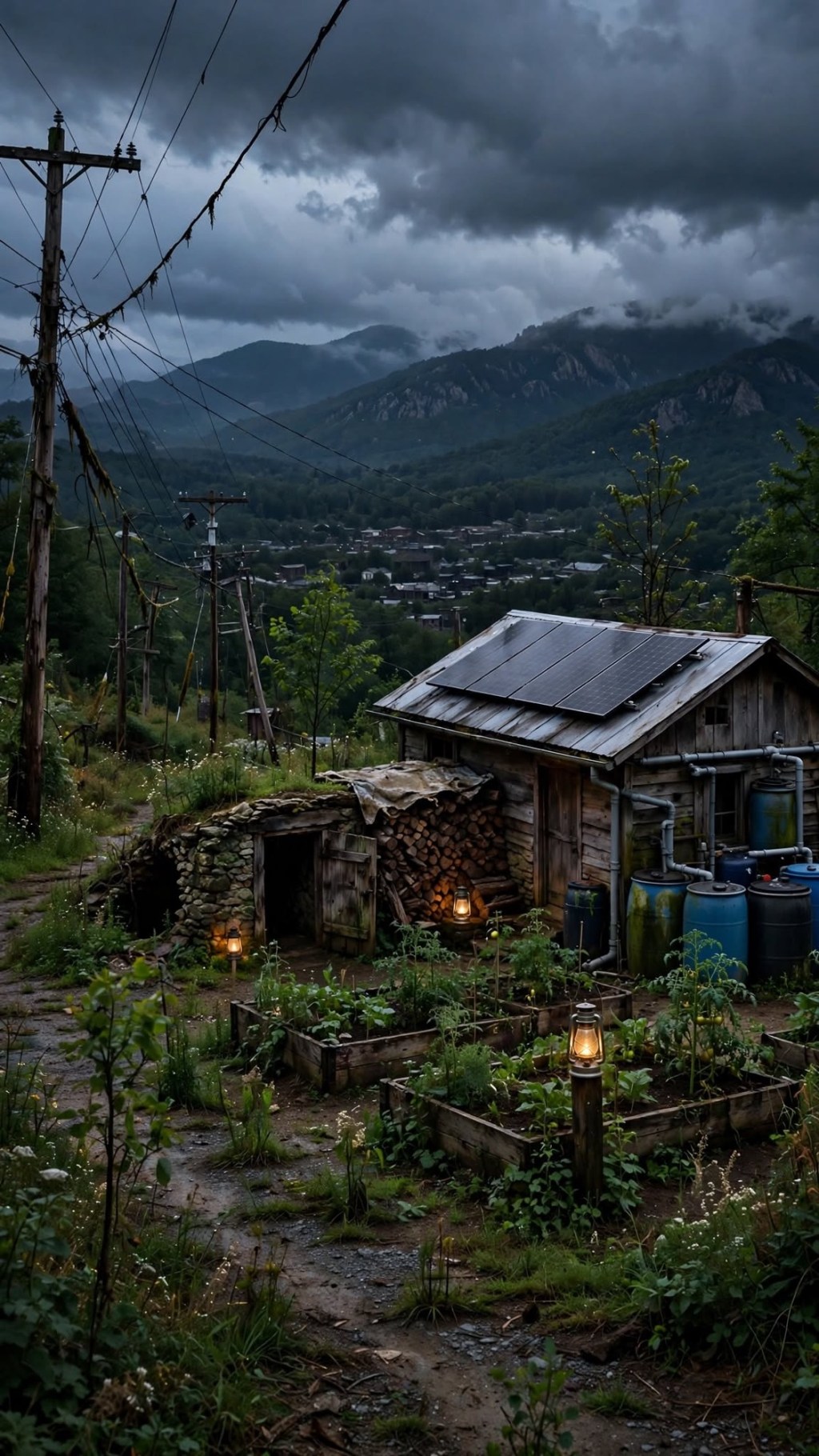
Most people think about a power outage lasting a few hours, maybe a day or two.
But what if the power didn’t come back for months?
What if the grid stayed down for 18 months?
That’s a completely different situation.
An 18-month blackout wouldn’t just mean sitting around with flashlights and candles. It would affect water, food, communication, transportation, medical care, heating and cooling, sanitation, banking, and nearly every part of daily life.
The goal isn’t to panic.
The goal is to understand what would actually matter if the modern conveniences we depend on disappeared for an extended period.
The First 72 Hours
The first few days would probably be the most chaotic.
People would immediately realize that refrigerators and freezers aren’t running. Gas stations may not be able to pump fuel. Stores could have trouble processing transactions, and bottled water and shelf-stable food would likely disappear quickly.
Your first priorities would be simple:
● Safe drinking water
● Food that doesn’t require refrigeration
● Lighting
● Basic first aid
● Communication
● A way to cook
● Sanitation
● Keeping yourself and your family safe
This is where a basic emergency supply starts paying off.
After the First Week
After several days, the problem becomes much bigger than food.
Water becomes one of the biggest concerns.
A household needs a dependable way to obtain, filter, purify, and store water. Depending on stored bottled water alone isn’t a great long-term plan.
You also need to think about cooking.
A propane stove, wood-burning setup, rocket stove, or other appropriate off-grid cooking method can become extremely valuable. Always use fuel-burning equipment safely and follow manufacturer instructions.
Then there’s sanitation.
Without normal water and sewer services, people need a plan for handling human waste, trash, dirty water, and personal hygiene.
These aren’t exciting preparedness topics, but they’re some of the most important.
The First Month
At one month, preparedness starts looking less like emergency camping and more like homesteading.
Food production becomes important.
A garden won’t replace everything you normally eat, but potatoes, beans, corn, squash, tomatoes, greens, and other crops can provide valuable calories and nutrition.
Learning to preserve food is just as important as growing it.
Canning, dehydration, fermentation, root-cellaring, and other traditional preservation methods can extend your food supply without depending entirely on electricity.
This is also where basic skills become incredibly valuable.
Knowing how to repair something, grow food, start a fire, preserve meat, collect water, or build a simple shelter can be worth more than having another box of supplies sitting on a shelf.
Three to Six Months
By this point, stored supplies begin running down.
That’s why long-term preparedness can’t simply be about buying more stuff.
You need systems.
A reliable water source.
A way to grow food.
A way to preserve it.
A way to cook.
A way to stay warm.
A way to communicate.
A way to maintain basic hygiene.
And most importantly, the knowledge to keep those systems working.
This is where skills such as gardening, hunting where legal, fishing, food preservation, basic mechanics, sewing, woodworking, first aid, and general repair become extremely useful.
Six to Eighteen Months
An 18-month outage would challenge even well-prepared households.
Eventually, batteries wear out. Fuel gets used. Tools break. Seeds need to be replanted. Food stores shrink.
Long-term preparedness means thinking beyond the first emergency.
You need redundancy.
If your only water source fails, what’s your backup?
If your primary cooking method becomes unavailable, what’s your alternative?
If your stored food runs out, can you produce or obtain more?
If a tool breaks, can you repair it?
If you lose access to the internet, do you have printed information you can reference?
These are the questions worth asking before a crisis happens.
Preparedness Isn’t About Fear
An 18-month blackout sounds extreme, and it is.
But thinking through an extreme scenario can reveal weaknesses in an ordinary emergency plan.
You don’t have to prepare for the end of the world.
Start with being able to handle a few days.
Then work toward a couple of weeks.
Then a month.
Build your food storage.
Learn to grow something.
Learn to preserve food.
Store water and have a way to treat more.
Learn basic first aid.
Keep important information on paper.
Build useful skills.
Then keep improving.
The biggest advantage you can have isn’t a garage full of expensive gear.
It’s knowing what to do when the gear isn’t enough.
That’s what preparedness is really about.
 Appalachian Traders
Leave a comment