
Rainwater Collection: A Simple Way to Be More Self-Reliant
Water is one of those things you don’t really think about until you don’t have it. On a homestead, that’s not something you want to be caught off guard with.
That’s why collecting and cleaning your own water is something I think every homesteader should at least understand—even if you’re just starting out.
Why I Like Rainwater Collection
Rain is already coming down for free, so it just makes sense to use it instead of letting it run off and go to waste.
Around here, rainwater can be useful for:
- Watering the garden
- Watering chickens and livestock, when properly collected and treated
- Washing tools and equipment
- Emergency backup water
- Household uses when properly treated
It’s one of the easiest ways to start becoming a little more self-sufficient without spending a fortune.
A Simple Setup That Actually Works
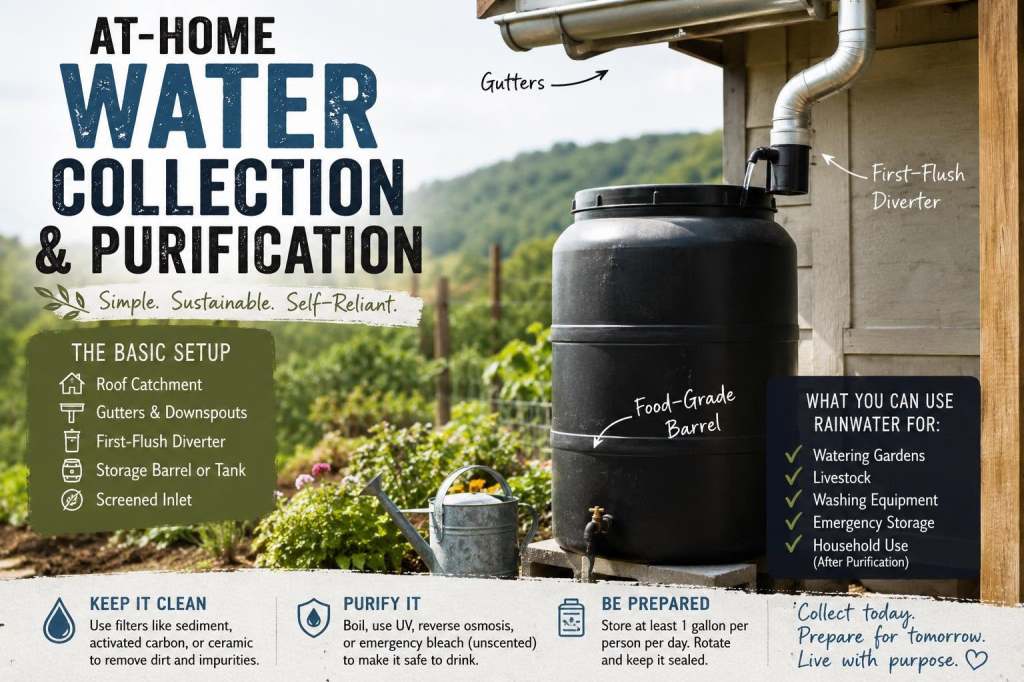
You don’t need anything fancy to get started. A basic rainwater collection system can be pretty simple:
- Gutters on your roof
- Downspouts running into a barrel or tank
- A screen to keep out leaves and bugs
- A first-flush system to divert the first bit of dirty runoff
- Storage barrels or tanks
A lot of folks start with food-grade 55-gallon drums. They’re relatively inexpensive, easy to find, and you can always add more storage later.
Keeping the Water Clean
One thing I always tell people is that you don’t just want to collect water—you want to pay attention to what’s getting collected with it.
Rainwater can pick up dirt, bird droppings, pollen, roof debris, and all kinds of other stuff before it ever reaches your storage barrel.
Some basic filtration options include:
- Sediment filters
- Activated carbon filters, which can help with taste and smell
- Ceramic filters for finer filtration
The right setup depends on what you plan to use the water for.
If You’re Drinking It, Purify It
Filtering water and making water safe to drink are two different things.
If you plan on using collected rainwater as drinking water, you need a treatment method that is appropriate for the contaminants you may be dealing with.
Some common options include:
Boiling: One of the simplest methods for killing many disease-causing microorganisms. Bring the water to a rolling boil for at least one minute.
UV light: UV systems can disinfect water by using ultraviolet light to inactivate many bacteria, viruses, and other microorganisms. The water generally needs to be relatively clear for UV treatment to work properly.
Chlorine: Unscented household bleach can be used for emergency water disinfection when used according to current public-health guidance. It’s important to use the correct concentration and amount.
Reverse osmosis: A more involved option that can remove many dissolved contaminants in addition to microorganisms, depending on the system and filters used.
For drinking water, I’d rather have a proper treatment system than assume a basic filter makes the water safe.
How Much Water Should You Store?
A lot of people don’t think about water until something goes wrong.
A good emergency-planning starting point is at least one gallon of water per person per day, with additional water needed for cooking, hygiene, pets, livestock, and other needs.
For a homestead, I’d rather have more water stored than realize I don’t have enough when the power goes out, the well stops working, or bad weather keeps you from getting supplies.
Water is one of those things you don’t want to “figure out later.”
Start Small
You don’t have to build a huge rainwater collection system right away.
Start with one barrel. Learn how your roof and gutters collect water. Figure out how much you actually use. Then expand the system as you need more storage.
The important thing is to start thinking about where your water comes from and what you would do if that source suddenly wasn’t available.
Final Thoughts
At the end of the day, rainwater collection is just smart living.
It’s not about being extreme or completely off-grid. It’s about being prepared, wasting less, and having another option when you need it.
Even if you start with one barrel, that’s still a step toward being more self-reliant.


Leave a Reply